This content is not medical advice and is provided for informational purposes only.
Have you recently been diagnosed with Irritable Bowel Syndrome (IBS) and had your doctor recommend a low FODMAP diet?
Are you wondering if this is truly the right approach for you? Between the confusion of conflicting food lists and the fear of having nothing left to eat, it is completely normal to feel overwhelmed.
Take a breath; you are not alone. Here is a clear overview of the FODMAP method, explained by a nutritionist, to guide you step-by-step toward a happier gut.
What Exactly are FODMAPs?
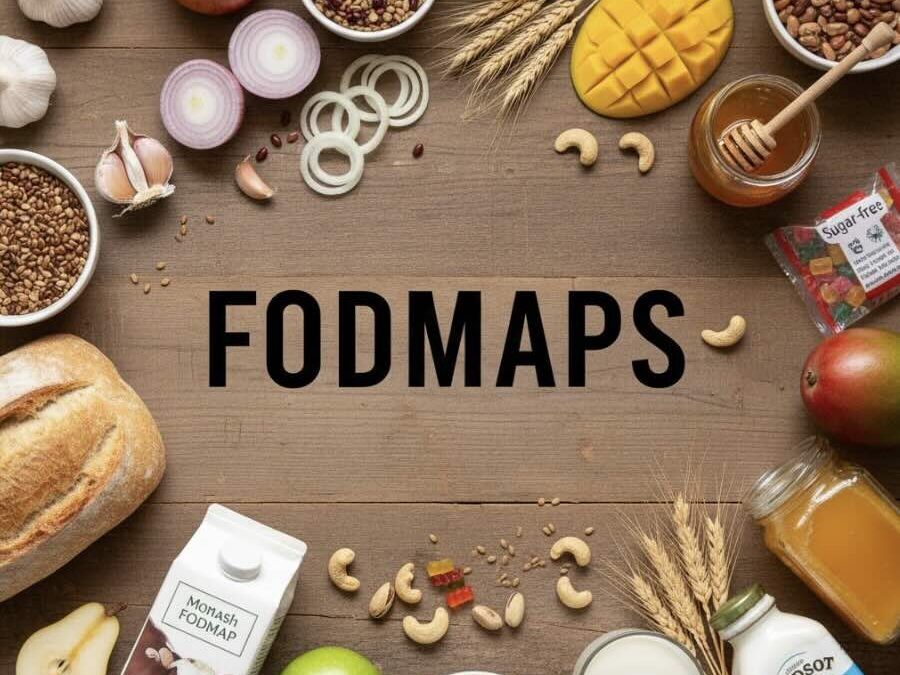
FODMAPs are a family of short-chain carbohydrates (sugars) found naturally in a variety of foods, even those considered “healthy,” such as certain fruits, vegetables, nuts, and legumes (1)
For most people, these sugars are digested without issue. However, for those suffering from digestive disorders, like Irritable Bowel Syndrome (IBS), endometriosis (2) or certain Inflammatory Bowel Diseases (IBD), these carbohydrates are poorly absorbed.
About 70% of people see a real difference in their health and well-being with the low FODMAP diet compared to a normal Western diet (3)
How do they affect your digestion?
When FODMAPs aren’t properly digested, they create a chain reaction in your system (1) :
-
In the small intestine: They act like a sponge, pulling in a large amount of water (which can cause diarrhea).
-
In the large intestine (colon): They are rapidly fermented by your gut bacteria. This process produces gas, leading to bloating, abdominal pain, and significant discomfort.
This is where a low FODMAP diet, guided by a dietitian-nutritionnist, becomes a powerful tool to identify your triggers and reclaim your quality of life.
What does the acronym FODMAP stand for?
-
F = Fermentable: Quickly fermented by bacteria in the colon.
-
O = Oligosaccharides: Found in wheat, garlic, onions (fructans), and legumes (GOS).
-
D = Disaccharides: Primarily lactose (dairy products).
-
M = Monosaccharides: Excess fructose (e.g., apples, honey).
-
A = And
-
P = Polyols: Sugar alcohols like sorbitol or xylitol (found in some fruits and “sugar-free” products).
2. Is the FODMAP Diet the Right Approach for You ?
The short answer: It depends. While highly effective, the low FODMAP protocol isn’t always the first step, even with an IBS diagnosis.
Digestive health is multifactorial. Before diving into significant dietary restrictions, it is often possible to achieve impressive results by simply adjusting the basics.
Why consult a professional before cutting everything out?
Sometimes, small strategic changes are enough to calm the digestive system without needing the full protocol.
Here are some examples:
-
Optimizing Fiber: Balancing the distribution of soluble and insoluble fiber throughout the day to regulate transit.
-
Reviewing Eating Habits: Working on chewing, stress management, or meal regularity (the how you eat is just as important as the what).
-
Adding Instead of Restricting: Incorporating foods that support gut health instead of just cutting food groups.
-
Targeted Support: Implementing specific interventions based on your real needs, untangling one symptom at a time.
Dietitian’s Take: Your Registered Dietitian/Nutritionist is there to identify priorities based on your unique reality. The goal is to set precise targets so you can progress one step at a time without imposing unnecessary restrictions. With the right support, you avoid wasting precious time and start feeling better much faster.
The Stages of the FODMAP Protocol: A Three-Step Journey (1)
Sometimes, the low FODMAP stage becomes necessary to regain your quality of life. It’s tempting to want to cut everything out on day one, but this diet should only be started after optimizing other pillars of your digestive health.
Why? Because if the foundation isn’t solid, your symptoms could actually worsen, or the results may not be significant. Based on your profile, we will choose together between a flexible approach (“FODMAP-gentle”) or the full protocol.
Phase 1: Reduction and Substitution (4 to 6 weeks max)
The goal here is to “put out the fire” in your gut. It is nearly impossible to accurately identify your triggers if you are experiencing daily flares. During this phase, my role is to ensure you:
-
Identify and Substitute: Effectively spot hidden FODMAPs and find tasty, nutritious alternatives.
-
Meet Nutritional Needs: Avoid vitamin and mineral deficiencies and ensure you have enough energy.
-
Maintain Adequate Fiber Intake: Select the right fibers to feed your gut bacteria (microbiome) without irritating your gut.
Stay Organized: Plan your meals optimally so this stage remains simple, delicious, and stress-free.
Examples of Smart Swaps: A Quick Overview of Low FODMAP Alternatives (4)
|
High FODMAP foods |
Low FODMAP alternatives |
|
Cereal products : Wheat, rye, barley |
Oats, quinoa flakes, quinoa,rice, corn pasta, rice, sourdough spelt bread, wheat/rye/barley free bread |
|
Veggies: |
Aubergine/eggplant, bean(green), bok choy, green capsicum (bell pepper), carrot, cucumber, lettuce, potato, bean shoots, zucchini (1/5 cup or 65g) |
| Fruits: Apples, apple juice, cherries, dried fruit, mango, nectarines, peaches, pears, plums, watermelon |
Cantaloupe (3/4 cup or 120g), kiwi fruit (green), mandarin, orange, pineapple, strawberries (5 mediums) |
| Dairy & substitutes: Cow’s milk, custard, evaporated milk, ice cream, soy milk (made from whole soybeans- in Quebec, it is then a high fodmaps source), sweetened condensed milk, yoghurt |
Almond milk, brie/camembert cheese, feta cheese, hard cheeses, lactose-free milk, soy milk (made from soy protein) |
| Protein: Most legumes/pulses, some marinated meats/poultry/seafood, some processed meats |
Eggs, firm tofu, plain cooked meats/poultry/seafood, tempeh |
| Nuts: Cashews, pistachios | Macadamias, peanuts, pumpkin seeds, walnuts |
Phase 2: Reintroduction (8 to 12 weeks) – The CRUCIAL Step
This is where many people make the mistake of stopping, which is risky for long-term health. If you don’t reintroduce FODMAPs, you risk depleting your microbiome and damaging your relationship with food. Once symptoms have significantly improved, we move to this pivotal stage:
-
Tolerance Testing: We reintroduce one FODMAP group at a time (e.g., fructose or lactose) over 3 days, gradually increasing quantities to identify your personal tolerance threshold.
-
Precision: You maintain a low FODMAP baseline during this period to avoid “muddying the waters” with other reactions.
-
Global Approach: This is also the time to explore complementary therapies, like stress management or psychological support, to durably soothe the gut-brain axis.
Phase 3: Personalization and Diversification
Once your triggers are identified, we work together to build your “new normal.” The goal is not to stay restricted, but to find sustainable dietary freedom.
-
Dietary Diversification: Reincorporating as many foods as possible to enjoy eating at home, in restaurants, and with friends.
-
Increasing Tolerance: Did you know tolerance can evolve? We work on strategies to gradually increase your ability to digest certain foods.
-
Microbiome Support: Nourishing your “good bacteria” by strategically reintroducing fibers and FODMAP groups you tolerate.
-
Digestive Re-education: Continuing the work on the communication between your brain and your gut for autonomous, long-term symptom management.
Quick-Fire Tips for Success
-
Don’t do it alone: I have rarely seen positive outcomes—physically or psychologically—when people try this solo. Professional guidance makes all the difference.
-
Learn to distinguish “normal” from “symptomatic”: It is completely normal to produce some gas or have mild bloating after a meal. The goal isn’t “zero gas,” but overall comfort.
-
Look beyond the plate: Sleep, stress, caffeine, spicy foods, and alcohol are all factors that can influence your symptoms just as much as FODMAPs.
-
Use the right tools (The Monash App): If you decide to start, forget old food lists found online. Download the Monash University App. It is the most reliable, up-to-date resource in the world and will help you diversify your diet safely.
-
Become a label pro: Get into the habit of reading ingredient lists. FODMAPs (like garlic or onion powder) often hide where you least expect them!
References
(1) Monash University. (n.d.). The Monash University low FODMAP diet dietitian course.
(2) Varney JE et al, Clinical Trial: Effect of a 28-Day Low FODMAP Diet on
Gastrointestinal Symptoms Associated With Endometriosis (EndoFOD)-A Randomised, Controlled Crossover Feeding Study. Aliment Pharmacol Ther. 2025;61(12):1889-903
(3) McIntosh K, Reed DE, Schneider T, Dang F, Keshteli AH, De Palma G, et al. FODMAPs alter
symptoms and the metabolome of patients with IBS: a randomised controlled trial. Gut. 2016.
(4) Monash University, School of Translational Medicine, Department of Gastroenterology. (2025). The 3-step FODMAP diet for gastrointestinal symptoms in endometriosis.